
I pause my bike at the top of the hill beneath a cluster of towering oaks. Their massive canopies surround me on all sides and I feel a bit like a child who has just built a pillow fort in the living room, thrown a blanket over the top, and entered an imaginary world. Birds and squirrels bustle about busily and for a moment, anything seems possible.
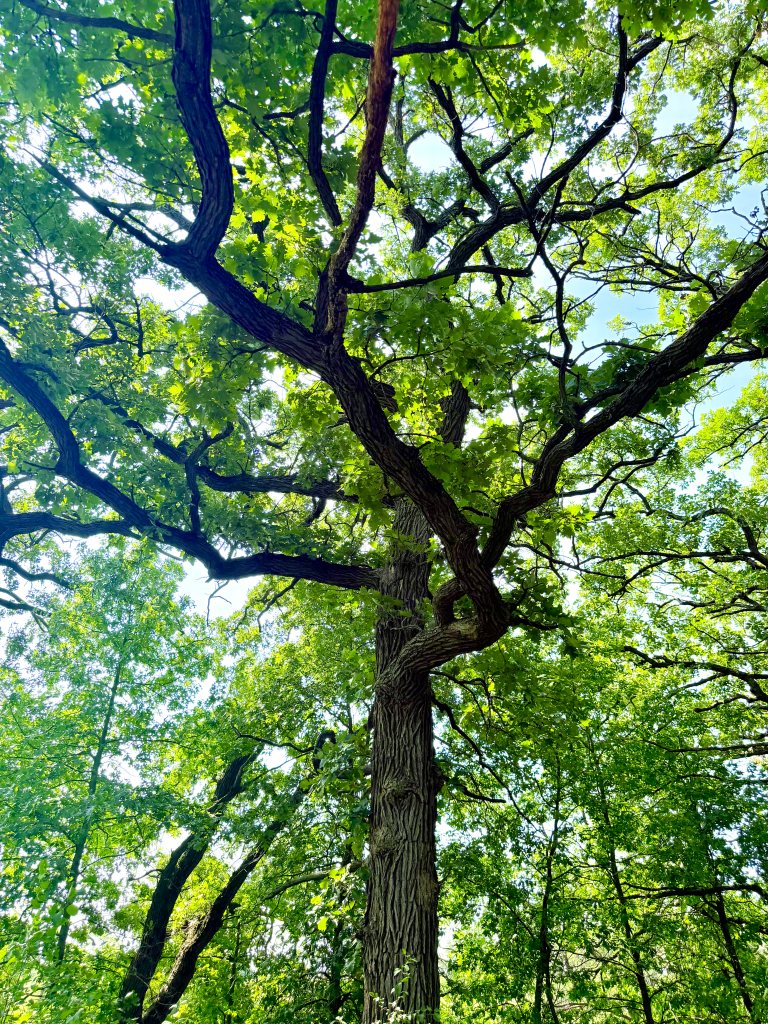
Oak trees are a powerful keystone species that can live for centuries, produce millions of acorns, and support more wildlife than any other tree genus in North America. Worldwide there are 450 species of oak trees, but only seven of these live in Minnesota. Even so, these massive trees play an outsized ecological role, supporting more than 534 species of beneficial native insects and dozens of species of birds, including grosbeaks, buntings, finches, nuthatches, orioles, vireos, waxwings, warblers, woodpeckers, and wrens.
In our part of Minnesota, the oak trees you see will either have round-lobed leaves (bur oak, white oak, and swamp white oak) or pointy-lobed leaves (red oak and northern pin oak) and you can often guess which species they are based on where you find them growing.

Bur oaks grow in prairies and savannas and you can often see them growing alone or in small groups amidst wide open fields. These trees could be called the quintessential survivors. Because of their massive size, dense root systems, and height, they are struck by lightning more often than almost any other tree. In addition, they are extremely drought tolerant, and are even adapted to withstand periodic fire.
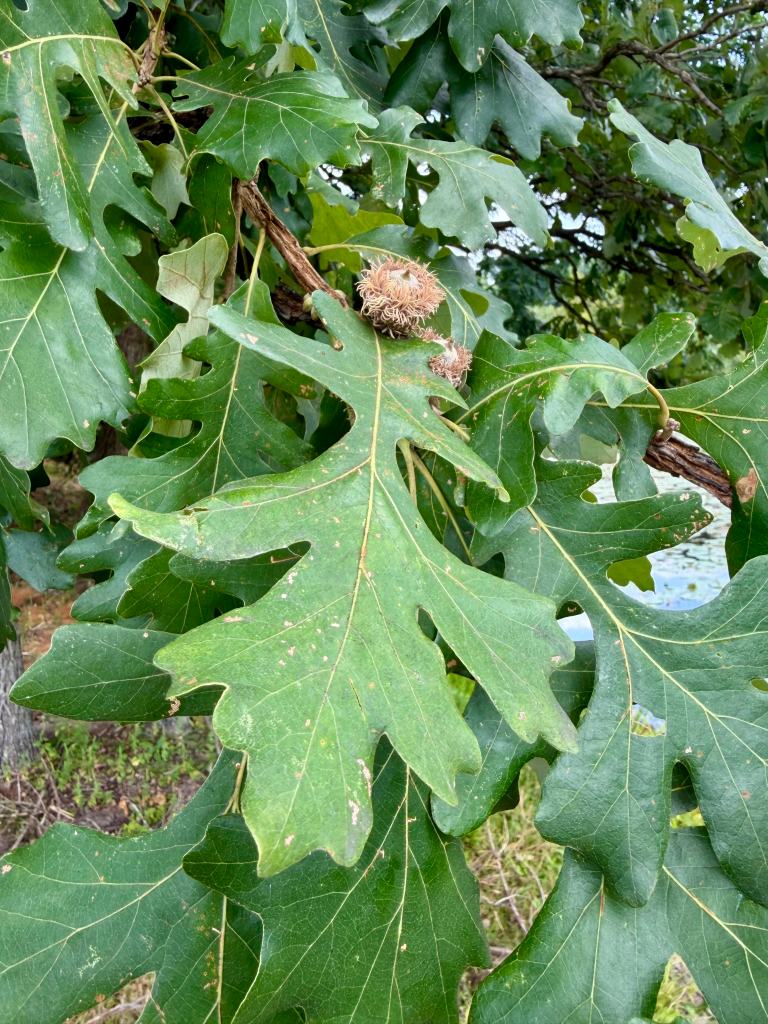
If you find an entire forest of oaks, it is much more likely that they are white oaks. These are abundant in southeastern Minnesota as far north as the Twin Cities, and often form woods with hardly any other species of trees. White oaks grow in well-drained soil and don’t tolerate flooding. In contrast, their cousins, the swamp white oaks, grow in river bottoms and moist soils. To summarize, prairie = bur oak, forest = white oak, river bottoms = swamp white oak.
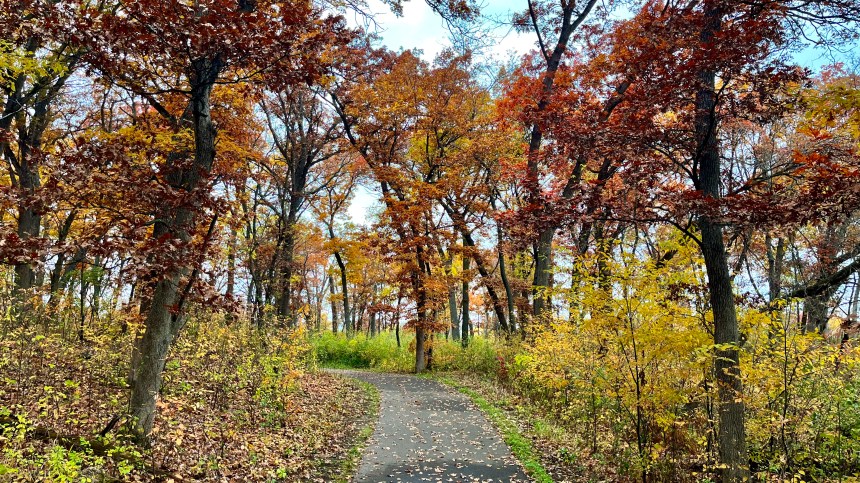
When it comes to pointy-leaved oaks, red oaks grow quickly, can tolerate some shade, have beautiful russet-red leaves in the fall, and are common throughout Minnesota. Northern pin oaks, on the other hand, are much less common, can’t tolerate shade, and only grow in dry, sandy soils on ridges.

Though oak trees are long-lived and resilient, they face many challenges in our modern world.
Oak savanna is a transitional habitat between prairie and forest, and as with prairie, it is an ecosystem that has historically existed in places where Native people, periodic fires, and large grazing animals helped to maintain an open landscape. In the absence of fire, other trees and shrubs slowly establish and fill in the spaces where prairie plants grow until eventually the savanna becomes a woods. Once this happens, maples, basswood, ironwood, and elm will eventually take over because oaks aren’t able to grow in the shade.

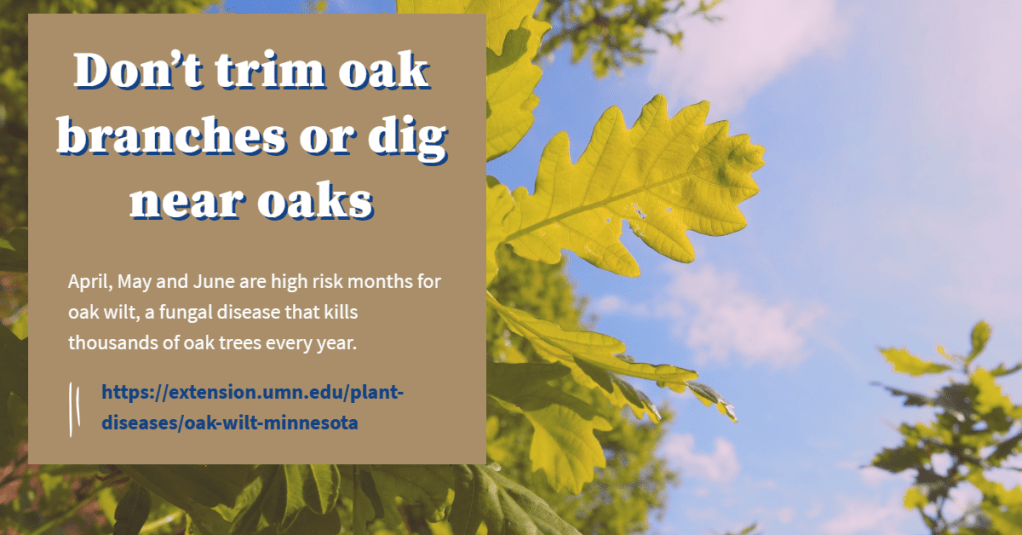
Another challenge is oak wilt, caused by a non-native, invasive fungus that has become established in southeastern and eastern Minnesota. Oak wilt is very common in Washington County and has especially impacted red and pin oaks. In addition, drought-stressed oak trees are also vulnerable to a native insect called the two-lined chestnut borer. To reduce the risk of transmitting oak wilt, woodland landowners should avoid pruning trees between April and July, and preferably wait until November if possible.
Looking for places to visit beautiful oak trees in the east metro?
Check out the walking trails at Oakdale Nature Preserve (there is a reason for the city’s name!), go biking or hiking at Lake Elmo Park Reserve, or stroll along the paved trails surrounding the Phalen Chain of Lakes in St. Paul and Maplewood.


